The Guiding Principles of Relational Inclusion
Understanding Relational Inclusion at Millbrook
At Millbrook Primary School, we believe that every child wants to succeed. When behaviour falls below expectations, we seek to understand what may be driving that behaviour while also helping children take responsibility for their actions.
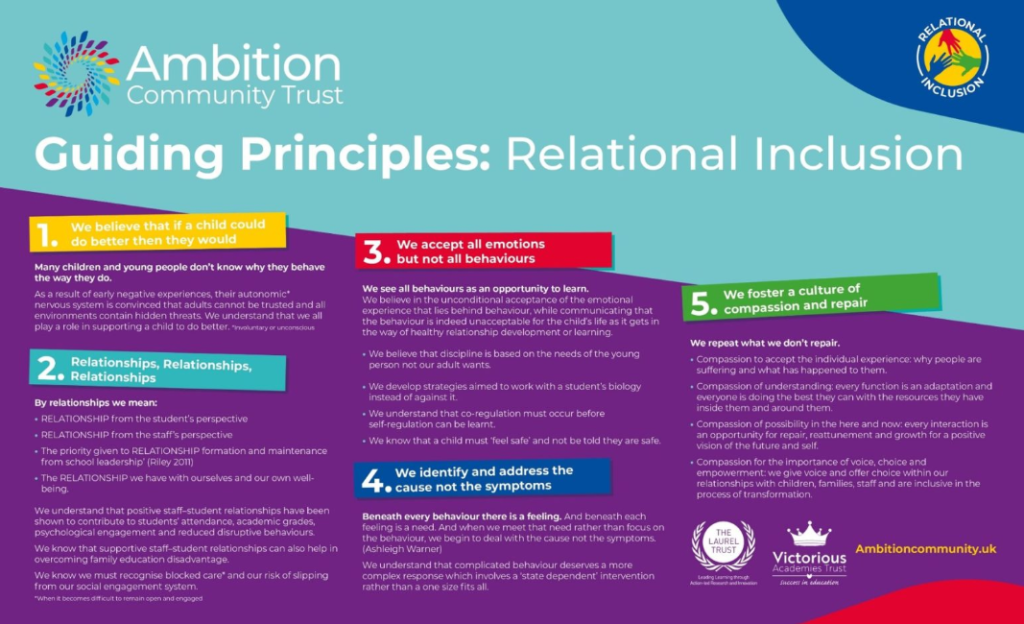
Our approach is guided by the Ambition Community Trust Relational Inclusion principles:
We believe that if a child could do better, they would.
Relationships are at the heart of learning and behaviour.
We accept all emotions, but not all behaviours.
We seek to understand the cause, not just the behaviour we see.
We promote compassion, repair and restoration.
This means that children are supported to reflect on their choices, understand the impact of their actions, and repair any harm caused. Expectations remain high, and inappropriate behaviour will always be addressed. However, consequences are designed to help children learn, rebuild relationships and make better choices in the future.
At Millbrook, we use “logical consequences” rather than arbitrary punishments. A logical consequence is directly connected to the behaviour and helps a child understand the impact of their actions.
For example:
If a child damages property, they may help restore or tidy it.
If a child hurts another person through words or actions, they may take part in a restorative conversation and repair the relationship.
If work is deliberately avoided, support will be provided to ensure the learning is completed.
These approaches help children develop responsibility, empathy and self-regulation while maintaining positive relationships. Please see the relational inclusion section on the website for more details (link to be added)
Relational Inclusion is at the heart of everything that we do. The following documents set out how we support all of our children.